
Beautiful Resistance
Aida Refugee Camp and the Alrowwad Cultural and Arts Society

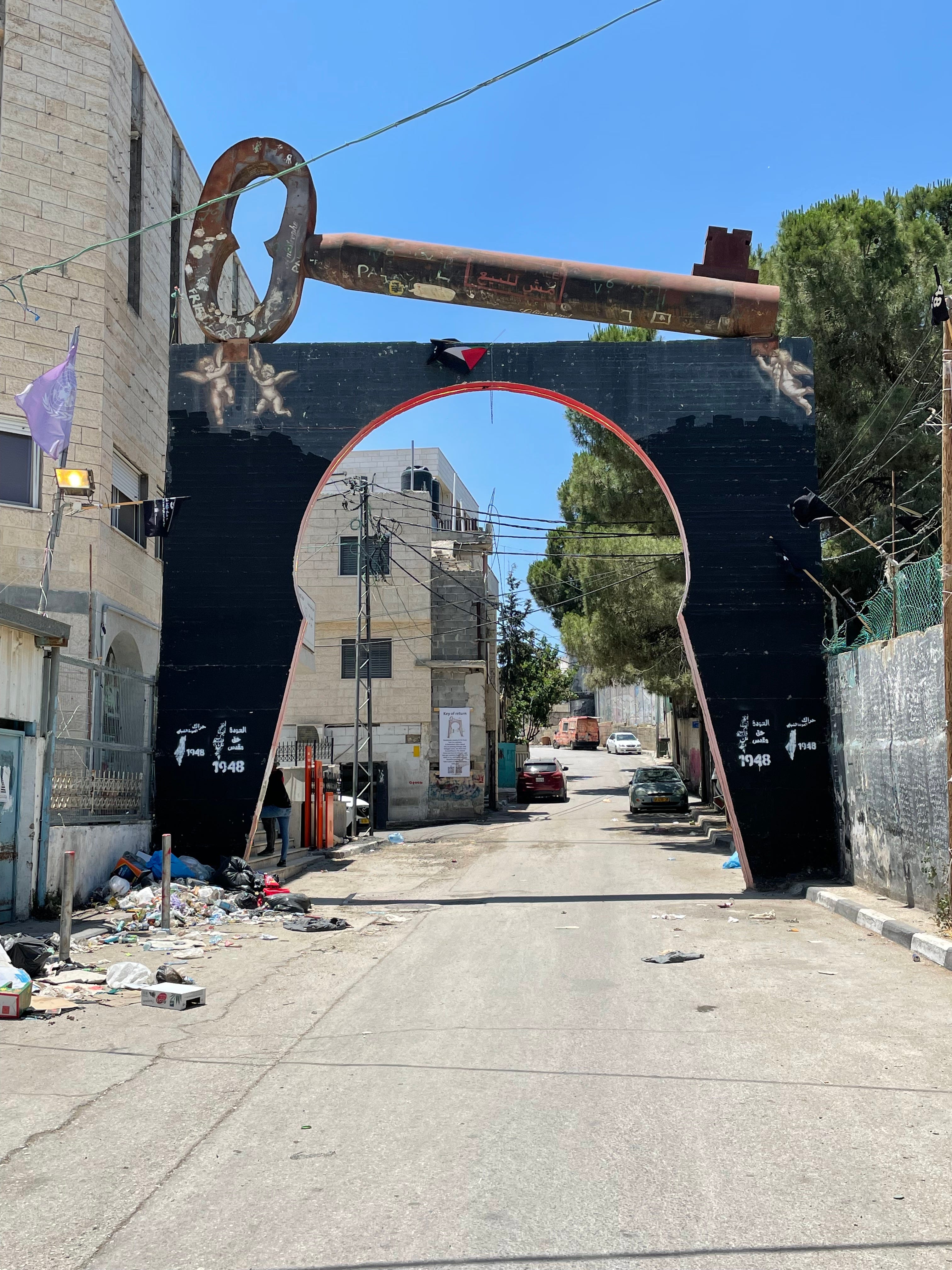
After our morning tour of the separation wall, our first day activities continued with a stop at the Aida Refugee Camp in Bethlehem. The entrance to the camp was impossible to miss— a giant keyhole and key, representing the millions of Palestinians who were forced from their homes in 1948, some of whom still hold the original keys to their homes, dreaming of the day when they might someday return.
A quick word about the Aida camp. It was established by the United Nations in 1950, shortly after the creation of the state of Israel, or, shortly after the Nakba. As of 2022, there were 7100 refugees registered as residents of the camp, which covers a mere .071 square kilometers. Imagine that many people trying to live in such a small, cramped space, and then imagine that in addition to the claustrophobic conditions, one would also have to deal with regular incursions by the Israeli military, sky-high unemployment rates, and a near constant lack of resources, and you can understand why tension and frustration levels in the camp often run high.
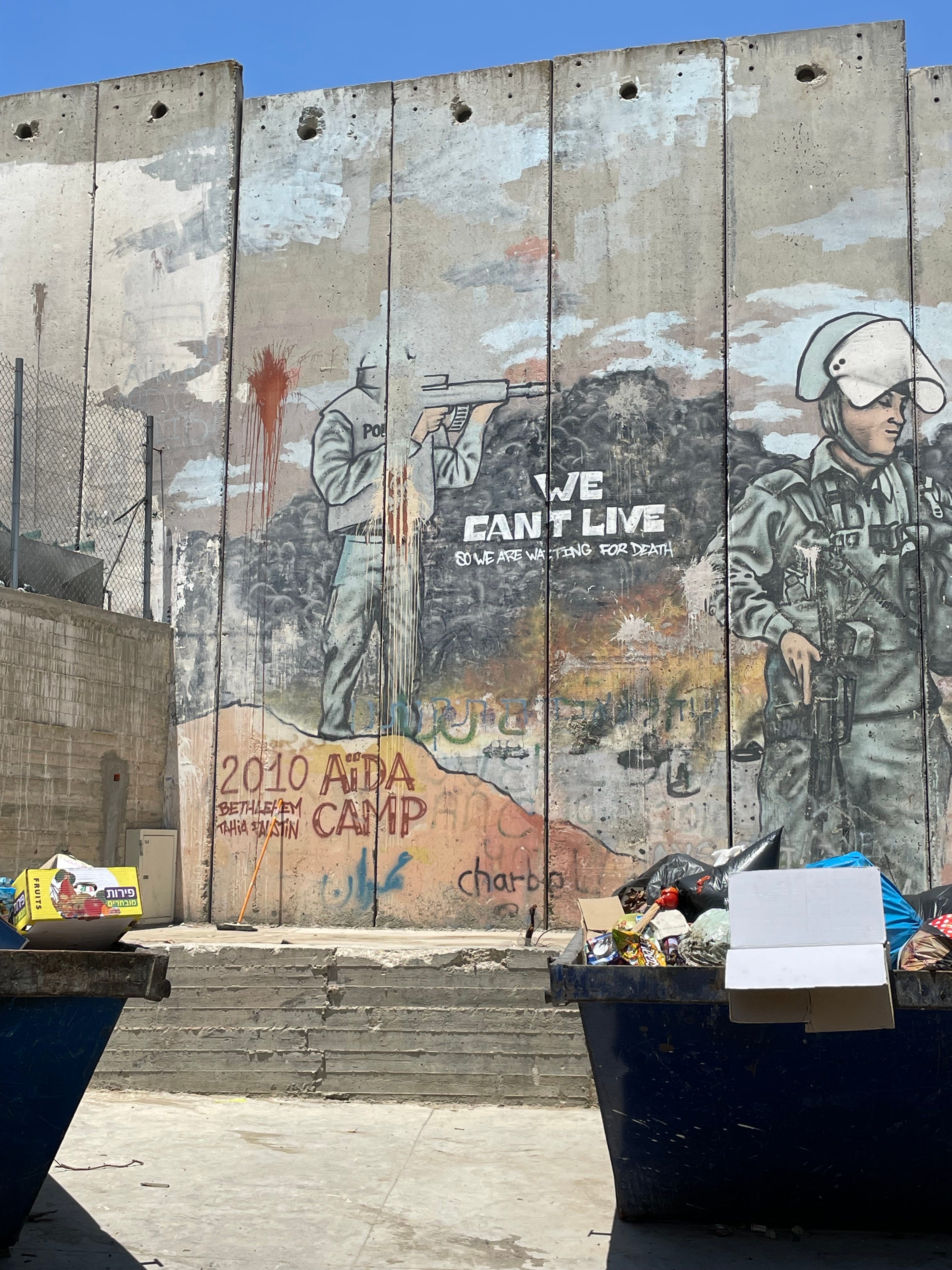
Upon entering the camp, our first impression was, indeed, rather grim. Garbage was piled high, as clearly the camp didn’t receive regular trash removal services. The separation wall loomed off to our right, and one couldn’t avoid seeing the large mural expressing a deep sense of hopelessness and despair:
But as we walked further, there were signs that despair was not the only sentiment in the camp:
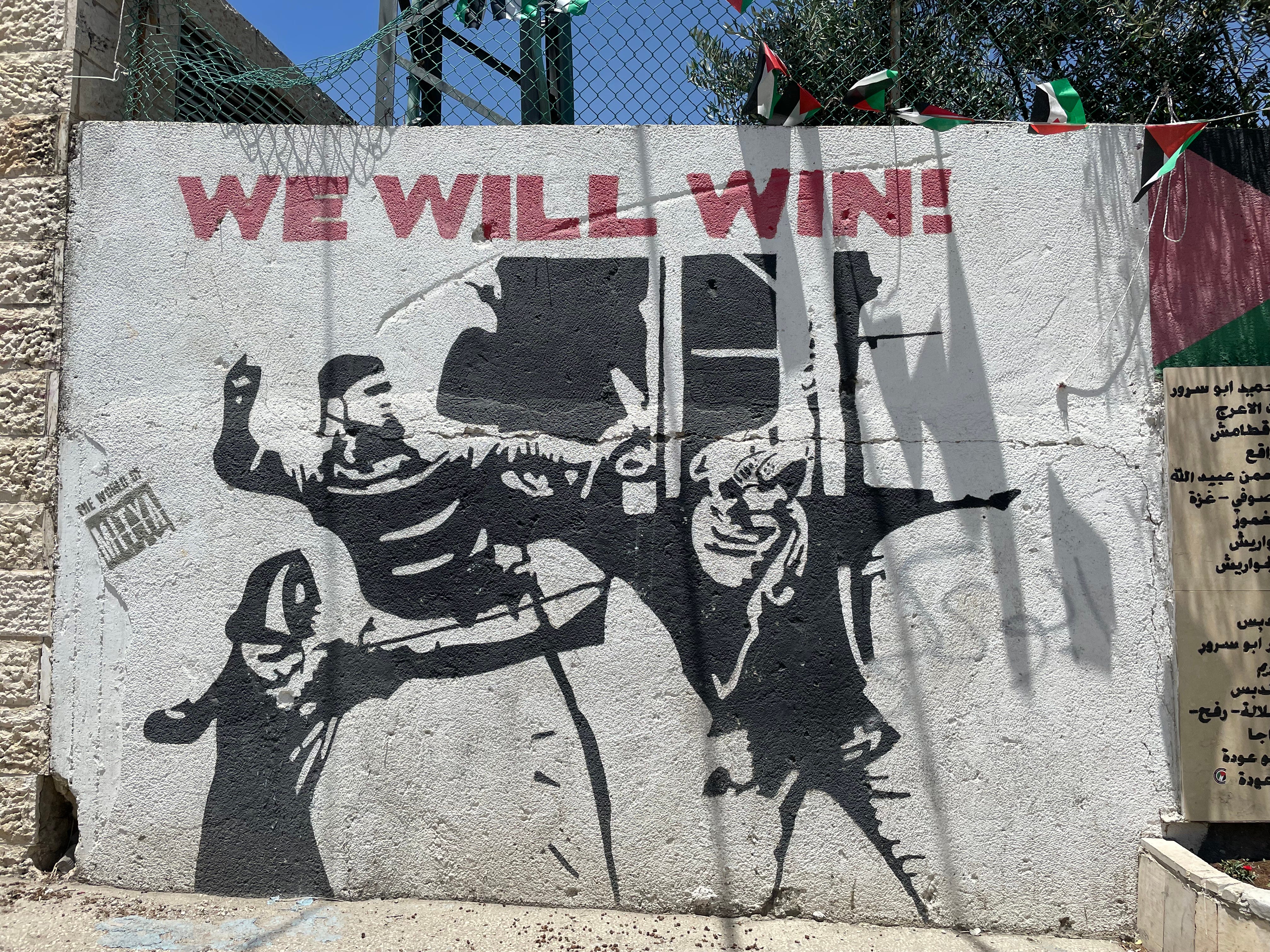
It wasn’t long before we reached our target destination, The Alrowwad Cultural and Arts Society. Alrowwad is an educational center for children, youth, and women that encourages non-violent resistance to the occupation through the use of visual and performing arts. Participants at Alrowwad are taught to channel their feelings of anger and frustration through art and creative self-expression. The founder and director of Alrowwad, Dr. Abdelfattah Abusrour, himself a former resident of the camp, coined the phrase “beautiful resistance” to talk about how their work in the arts contrasts the ugliness of the military occupation under which people in the camp live. During our visit, he talked about the need to teach children a different, more productive way to deal with their anger other than throwing stones at the wall, or eventually, joining up with an armed resistance that could easily end up taking their life. As one Alrowwad participant said, “I don’t want to die for my country. I want to live for my country.”
Side note: as Abed, the director, was speaking to us, we started to hear lots of gun fire happening outside. No one seemed particularly concerned about this, so our group did not say anything, but someone must have given away a look of concern, because eventually, a young person piped up to inform us that it was all celebratory gun fire. One of the young residents of the camp was apparently being released from prison that day, and there was to be a bigger celebration that evening. This, of course, speaks to a larger issue, which is that it is not uncommon for young men in these camps to be arrested, especially in the middle of the night, and held as political prisoners for their role in the resistance movement. The Aida camp is not unlike the refugee camp in Jenin, in that it tends to be a hotbed of resistance. Given the conditions of these camps and the median age of those who live in them, it’s not difficult to understand why that is the case. All the more reason why organizations like Alrowwad are so important for the youth who live in these camps (a similar organization in the Jenin camp is the Freedom Theater).
Before we left Alrowwad, we were treated to a special performance of the youth dance group, who were in the midst of preparations for an international tour. While we may have entered the camp trepidatious and somewhat saddened by the conditions, we couldn’t help but leave with some of the contagious hope and joy that these young people exuded with such confidence and abundance.